
Concrete, pavers & stone
Concrete, Paver & Stone Patio Cleaning in San Diego
Hardscape is where the wrong method shows the longest. Travertine etches, pavers lose joint sand, colored concrete goes blotchy, and a turbo nozzle leaves a signature you will see for years.
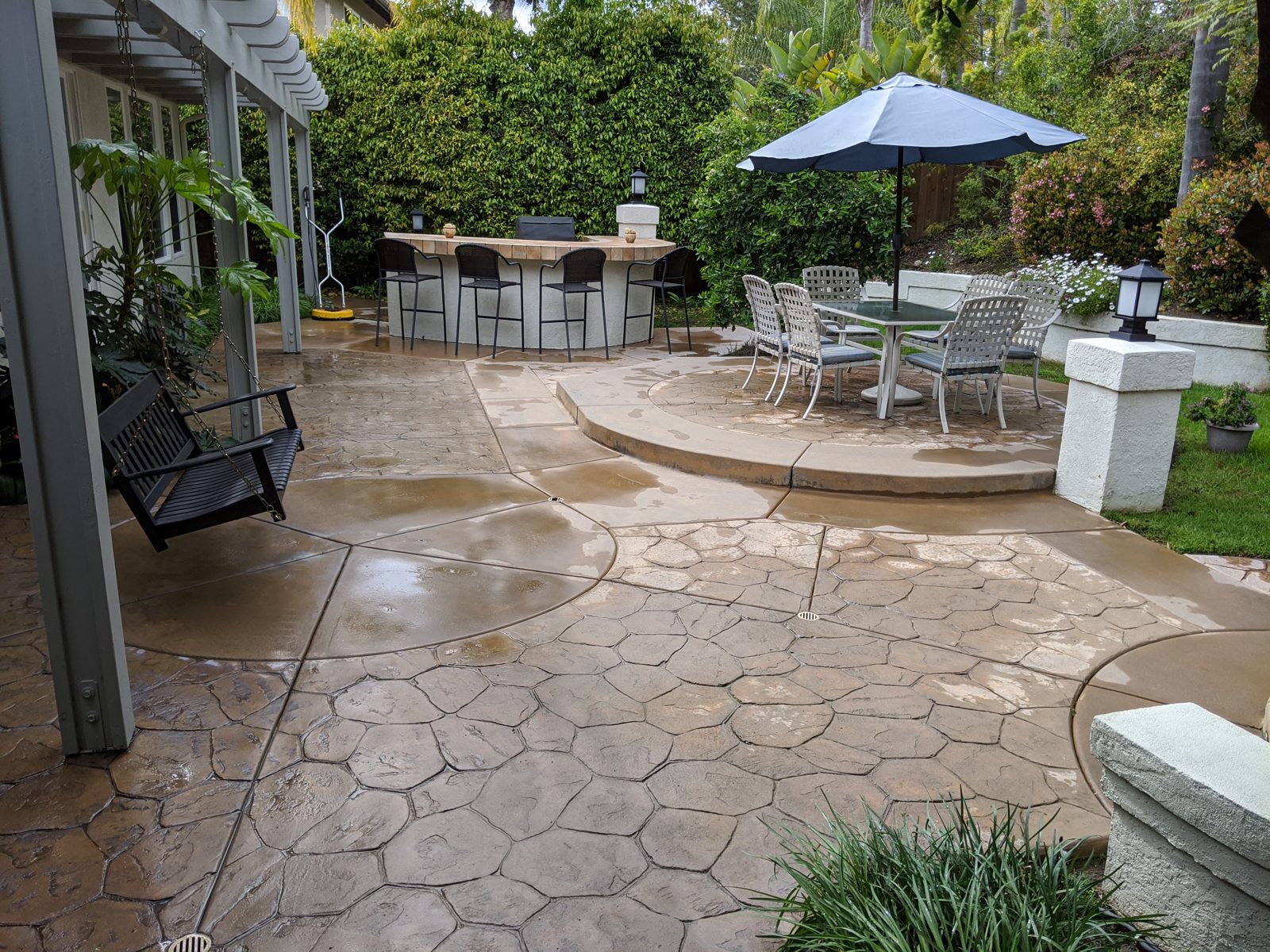
We match pressure, temperature, and chemistry to the specific stone or concrete you have, and where the material, drainage and job suit it, we use a rotary surface cleaner that leaves an even finish rather than wand arcs.
This page covers ground-level patios, pool decks, courtyards, covered patios and walkways. The cleaning plan depends on the material, its condition, where the water will drain, the staining present, and the planting around the edges.
Cleaning a condo or high-rise balcony instead? See balcony cleaning in San Diego. Add-ons for the same visit include outdoor furniture cleaning, outdoor cushion cleaning, exterior window cleaning, and complete exterior detailing of the whole patio.
What this solves
Common problems we see
- Zebra striping and wand arcs from a previous cleaning
- Black organic growth in shaded joints and along drip lines
- Efflorescence — the white mineral haze that returns after rain
- Rust from irrigation water, planters, and patio furniture feet
- Oil and barbecue grease shadows near the kitchen area
- Weeds and ants in paver joints where the sand has washed out
Scope
What's included
- Pre-sweep and dry debris removal, including planter beds at the edge
- Landscape protection and drainage awareness before wetting down
- Pre-treatment for organic growth, rust, and oil where present
- Cleaning method matched to the material — not every surface is pressure washed
- Detail of edges, steps, thresholds, and hard-to-reach corners by hand
- Optional joint sand replacement on pavers and sealing quoted separately
Our process
How the work is done
01
Identify the surface
Travertine, saltillo, and colored concrete each have a maximum safe pressure, and knowing which you have determines everything else.
02
Protect and pre-wet
Plants, glass, and metal are protected; adjacent surfaces are pre-wet so nothing dries with solution on it.
03
Pre-treat
Organic growth is treated rather than just blasted off, with products suited to the surface.
04
Clean
Where suitable for the material, drainage and job, a rotary surface cleaner gives even coverage without wand arcs. Softer or sensitive surfaces are soft washed or hand detailed instead.
05
Detail and rinse
Edges, grout lines, and steps are hand-detailed, then the area is rinsed where the surface and drainage allow, or residue is removed by a lower-water method.
06
Finish
Joint sand is re-swept where needed and furniture is placed back once the surface is dry.
In detail
Ground-level patios and larger outdoor surfaces
Pavers, concrete, stone, travertine and tile each respond differently to water, pressure and cleaning products. Poolside areas, courtyards and covered patios add their own questions: where the water drains, what is planted along the edge, and how the surface has been treated before.
We plan each job around those details — dry debris removal first, a cleaning method suited to the surface, hand detailing of edges and corners, and optional stain treatment where it is likely to help.
Part of our complete patio cleaning service
This page covers ground-level surfaces. For the full picture — furniture, cushions, turf, kitchens and more — see our complete patio cleaning service. Condo and high-rise balconies have their own page, because we clean them with a different, low-moisture method.
Why patio surface cleaning matters
- Your patio gets dirty faster than you think — dust, pollen, dirt, and grime build up slowly until the space feels unusable.
- Slippery buildup becomes a hazard — algae and organic growth create slick surfaces, especially in shaded or damp areas.
- Outdoor spaces should feel enjoyable — you should be able to relax, host, and use your space without thinking twice.
What we clean
- Paver patios and walkways
- Concrete, stamped and colored concrete
- Travertine, flagstone and natural stone
- Tile and porcelain patios
- Pool decks, courtyards and covered patios
Paver, concrete and stone cleaning
Over time, pavers, driveways, and walkways collect dirt, algae, and stains that dull their appearance and make the space feel neglected — even when everything else is clean.
Professional paver and concrete cleaning can brighten these surfaces, reduce slippery growth, and make your property look well-maintained again.
Cleaning methods, based on your surface
Not every surface should be treated the same, and not every surface should be pressure washed. Depending on the material and its condition we may use a surface cleaner, soft washing with appropriate cleaning products, or controlled pressure where the surface can take it.
Some stains — older rust, oil and etching — may lighten rather than disappear. How long a patio stays clean depends on sun and shade, nearby landscaping, how the space is used, and how it is maintained.
Why hardscape cleaning matters
- Curb appeal drops fast — dirt, algae, and staining build up over time, making your property look older than it is.
- Surfaces become slippery and unsafe — organic growth creates slick conditions on patios, walkways, and pool decks.
- Pavers start to shift and break down — when joint sand washes out, pavers loosen, weeds grow, and the surface becomes uneven.
- Protect your investment — without proper maintenance, hardscape surfaces wear down faster and cost more to replace.
Optional paver resanding and sealing
When the sand between your pavers washes away, pavers loosen, weeds grow, and water works its way underneath. Resanding deep cleans the joints, installs fresh joint sand, and compacts it to lock the pavers in place.
Sealing is optional: it enhances color and finish, helps repel stains, reduces weed growth, holds joint sand in place, and extends the life of the surface. Both are quoted as needed rather than assumed.
In detail
What hardscape cleaning involves on different surfaces
Hardscape cleaning is matched to the surface, because the same equipment that safely cleans broom-finish concrete will destroy travertine and blow the joint sand out of a paver field.
Where suitable for the material, drainage and job, concrete and pavers are cleaned with a rotary surface cleaner that keeps pressure even and avoids the striping you get from a hand wand. Natural stone — travertine, limestone, flagstone, saltillo — is soft-washed with pH-appropriate chemistry and much lower pressure.
Where relevant, the work includes joint sand replacement and re-sanding after cleaning, plus treatment for the specific staining present: rust from irrigation, organic tannin from leaf litter, oil from a grill or vehicle, or efflorescence pushing up through the surface.
Materials & surfaces
What we work with
- Travertine, limestone, and flagstone
- Concrete pavers and interlocking hardscape
- Broom-finished, stamped, and colored concrete
- Saltillo, porcelain, and outdoor tile
- Brick, slate, and decomposed-granite edges
- Pool decks, walkways, courtyards, and covered patios
Honest expectations
Results and limitations
- Even tone across the full surface with no wand marks
- Joint lines that read sharp and defined again
- Slip resistance restored where growth had made shaded areas slick
What cleaning cannot fix
- Etching, spalling, and prior acid damage are permanent
- Some rust and oil staining reduces significantly but does not disappear entirely
- Efflorescence can recur as moisture continues to move through the slab
- Sealing is a separate service and requires a fully dry surface
Best for
Who this service suits
- Courtyards, pool decks, and entry walkways ahead of a season of use
- Larger ground-level patios with planting beds and drains to protect
- Homes with shaded patios that go green each winter
Pricing
What it costs
Quoted based on your space, condition, and scope.
What moves the price
- Square footage and surface material
- Level of organic growth, rust, and oil staining
- Access, water availability, and where runoff can safely drain
- Whether joint sand replacement or sealing is included
San Diego conditions
San Diego hardscape problems by neighborhood
Hardscape here tells you where the house is. Coastal patios grow biofilm and salt deposits; inland patios show hard-water mineral crust and dust bonded by irrigation cycles.
What we see locally
- Shaded coastal patios develop slick green biofilm that becomes a genuine slip hazard when the marine layer wets it
- Hard water from inland irrigation leaves white mineral crust on stone and along paver edges
- Jacaranda, bougainvillea, and eucalyptus drop stains that set fast on porous stone
- Winter rains lift efflorescence to the surface of concrete and pavers, which returns unless the underlying moisture path is addressed
Maintenance
Keeping patios and pavers clean year-round
Most hardscape damage is preventable with drainage and timing, not with more scrubbing.
Sweep before the rain
Wet leaf litter left on porous stone tannin-stains within days. Dry litter blows away harmlessly.
Adjust irrigation off the hardscape
Overspray is the primary source of both mineral crust and rust staining on patios.
Address biofilm early
Green film is far easier to remove when it first appears than after it has become established.
Keep joint sand topped up
Missing sand lets pavers shift and weeds establish. Re-sand after any deep clean.
Reseal on schedule
Sealed travertine and pavers in San Diego typically need attention every two to four years depending on sun and traffic.
Send photos of your space and we'll scope concrete & paver cleaning properly.
Service area
We cover San Diego County — coastal, canyon, and inland.
Most of our concrete & paver cleaning work happens in La Jolla, Del Mar, Carmel Valley, Encinitas, Rancho Santa Fe, Coronado, and the surrounding neighborhoods. If you're nearby and not on that list, send photos anyway — we'll tell you straight away whether we can get to you.
Related services
Often booked together
Balcony Cleaning in San Diego
Balcony cleaning in San Diego for condos, apartments and high-rises. No pressure washing — a low-moisture method that keeps water off the unit below.
Deck Cleaning in San Diego
Deck cleaning in San Diego for wood and composite decks, fences and railings. Low-pressure methods; sealing and restoration quoted separately.
Complete Exterior Detailing in San Diego
PatioMaid's signature full-space reset for San Diego homes: hardscape, furniture, cushions, kitchen, shade, glass, and turf handled in the correct order.
Hosting soon? Pre-party outdoor cleaning gets your outdoor entertaining area ready before guests arrive.
Managing an apartment community, HOA or hospitality property? Commercial outdoor cleaning in San Diego covers recurring common-area and amenity care.
Send photos. Get a real quote.
Wide shots plus close-ups of the problem areas are enough for us to scope concrete & paver cleaning and price it properly.