
How to Clean Outdoor Cushions (Without Ruining Them)
6 min read · PatioMaid
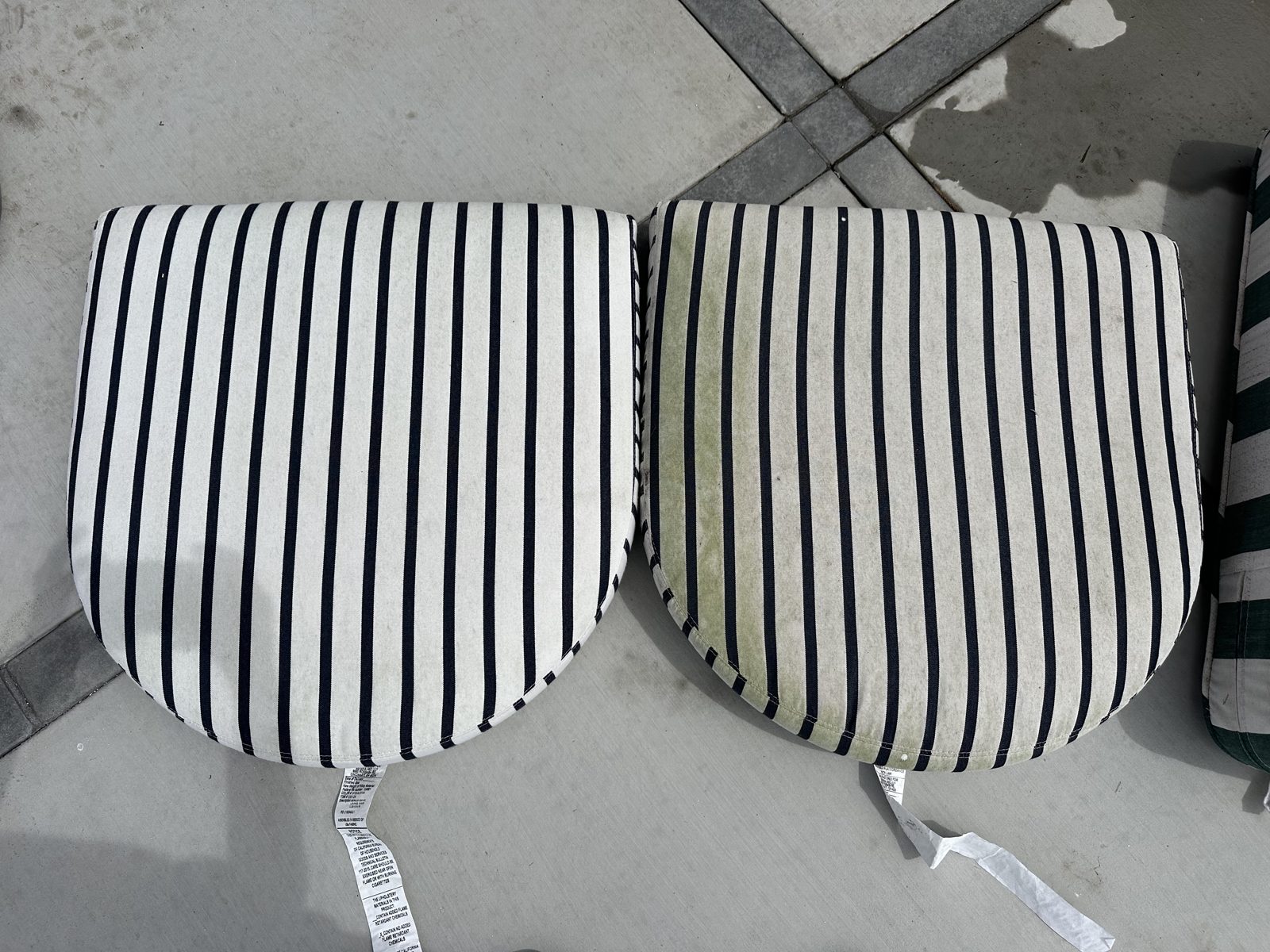
Outdoor cushions take a beating in San Diego — sun, marine air, pollen, sunscreen, pets and the occasional spilled drink. The good news: most cushions can be brought back with the right method. The bad news: the wrong method (a pressure washer, bleach on the wrong fabric, or drying them flat) is how cushions get faded, torn or mildewed from the inside.
Before you start: check the fabric and the tag
Look for a care tag or the manufacturer's name. Solution-dyed acrylics (like many performance outdoor fabrics) tolerate stronger cleaners. Printed polyester and olefin are more sensitive to bleach and fade faster. If the covers zip off, check whether the manufacturer allows machine washing — many don't, because the covers shrink and won't go back on.
What you'll need
- A vacuum with a brush attachment
- A soft-bristle brush
- Mild dish soap or a fabric-safe outdoor cleaner
- A bucket of lukewarm water
- A garden hose with a gentle spray setting (not a pressure washer)
- Clean towels
Step-by-step: how to clean outdoor cushions
- Vacuum both sides and the seams to lift loose dirt, sand and pollen. Scrubbing dirt into wet fabric makes it worse.
- Mix about a teaspoon of mild dish soap per quart of lukewarm water.
- Test the solution on a hidden spot and let it sit a few minutes to confirm no color change.
- Work the solution into the fabric with a soft brush in small sections. Don't saturate the foam.
- Let it dwell 10–15 minutes, then rinse with a gentle hose spray until the water runs clear. Leftover soap attracts dirt.
- Press out excess water with towels — don't wring.
- Stand cushions on their edge in the sun and airflow, flipping every few hours.
How to remove mildew from outdoor cushions
Mildew usually means moisture got trapped in the foam. For bleach-safe fabrics, a diluted oxygen or bleach-based outdoor cleaner used exactly as labeled can lift surface spots. For printed or unknown fabrics, stick to a mild soap or a white-vinegar-and-water mix, and test first. If the smell returns after drying, the mildew is inside the fill — surface cleaning won't reach it.
Drying is where most DIY jobs go wrong
Thick seat cushions can hold water for a day or more. Storing or using them before they're fully dry is the most common cause of musty smells and new mildew. Dry on edge, in sun and breeze, and squeeze a corner before putting them back.
What not to do
- Don't pressure wash cushions — it tears seams, forces water into the foam and frays the fabric.
- Don't use bleach unless the fabric is labeled bleach-safe.
- Don't machine-dry covers unless the manufacturer says it's safe.
- Don't lay cushions flat to dry.
When professional cushion cleaning makes sense
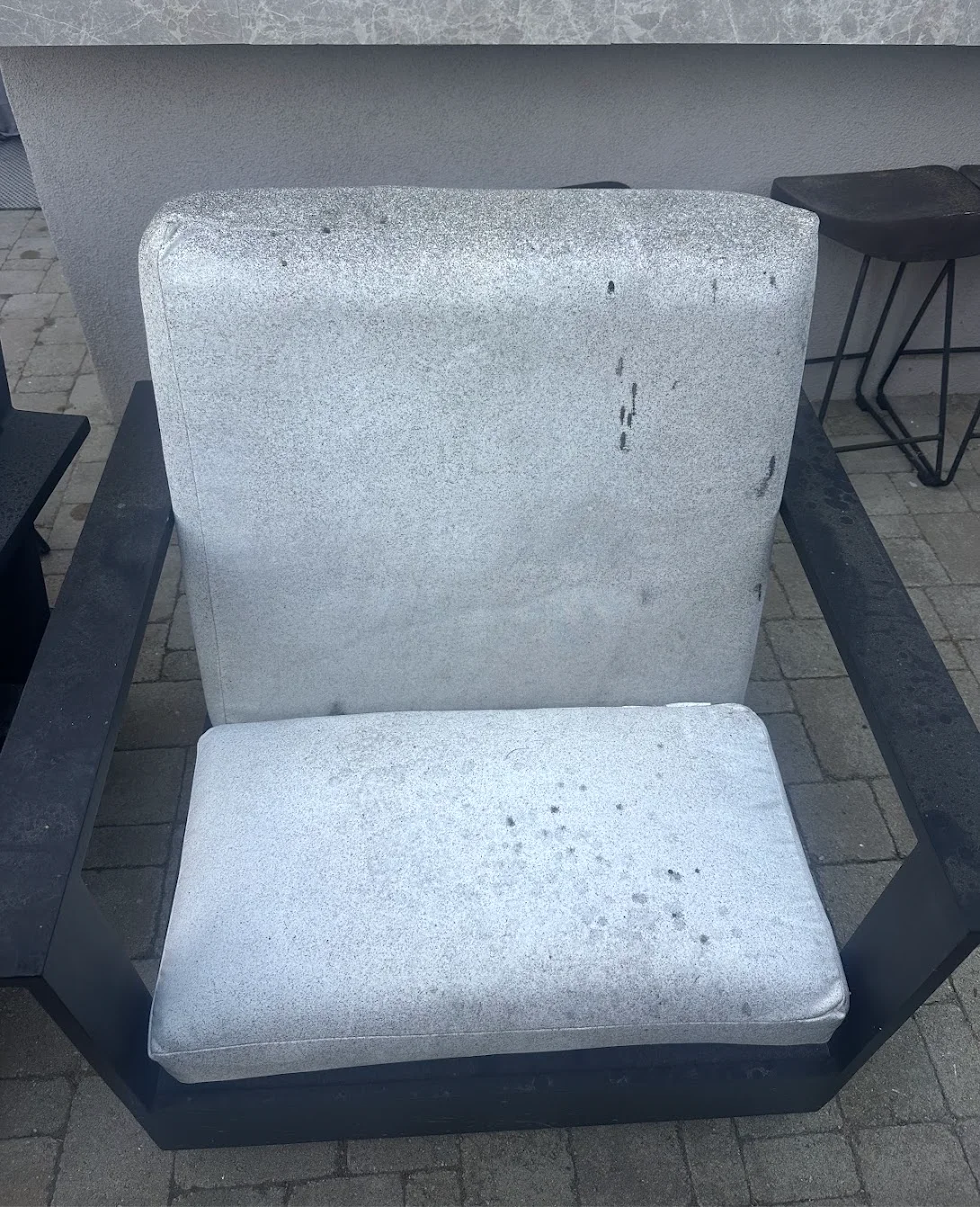
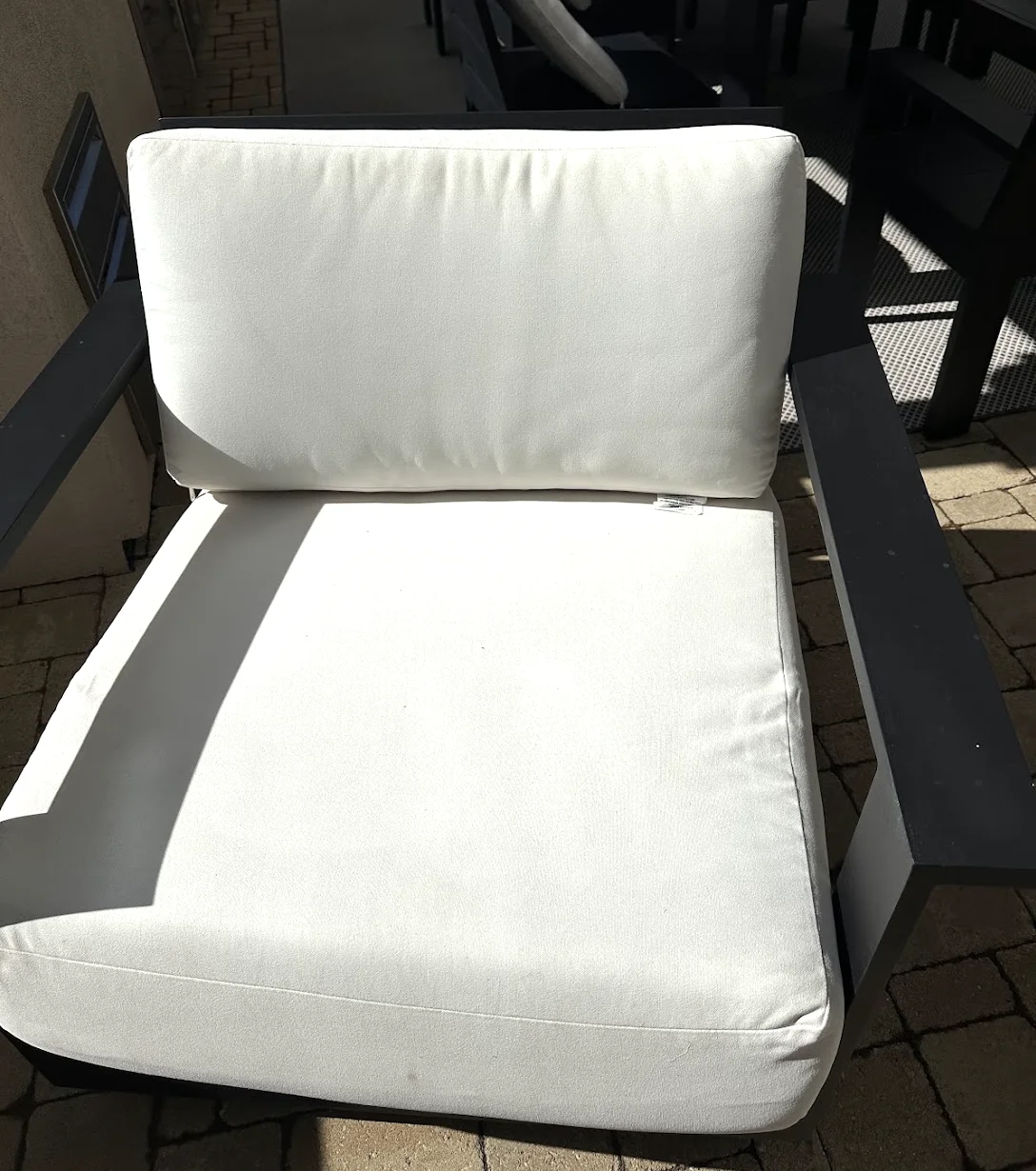
DIY works well for light, surface-level dirt. Deeper soil, sunscreen and body oils, pet accidents, and odors trapped in the foam need hot-water extraction — the same principle used on upholstery — which flushes the fabric and pulls the dirty water back out instead of leaving it in the cushion. That's how PatioMaid cleans cushions across San Diego County: vacuum, pre-treat, extract, and a planned drying time.
Common questions
Can I put outdoor cushion covers in the washing machine?
Only if the care tag allows it. Many covers shrink or lose their water-repellent finish in a washer, and may not fit back over the foam.
How often should outdoor cushions be cleaned?
In San Diego, a light vacuum and spot-clean monthly during heavy use, and a full cleaning once or twice a year, keeps most cushions in good shape.
Can you get mildew out of outdoor cushions?
Surface mildew often comes out with the right cleaner for the fabric. Mildew inside the foam usually needs extraction or, in severe cases, replacing the insert.